Digitizing my 35mm film archive with a DSLR
One of my big side projects was digitizing my family photographs. I have literally thousands of photos to digitize in very different formats: black and white or color prints, negative films of different sizes (35mm, medium format), even positive films (Kodak Ektachrome)…
Most of my pictures are 35mm film negatives, and I had different choices to digitize them:
- Send them to a lab
- Scan them myself by buying a dedicated scanner
- Scan them with my DSLR directly
Digitizing film with a camera is not as crazy as it sounds. In fact, this method has many advantages:
- Scanning is generally much faster than with a dedicated drum scanner.
- It might be the cheapest option if you already own the equipment.
- The post office won’t lose your negatives (yes, it happened to me).
- The scan quality is very good with a decent macro lens.
However, this method also has its drawbacks:
- Setting up the equipment takes space and time (film holder, focus, exposure, a dark room…).
- Any dust on the film won’t be removed, unlike with some dedicated scanners.
- Software post-processing is required to crop the image, convert the negatives to positives, and remove dust.

I have to admit: this project takes a lot of time and space as I have about three thousands negatives. But it’s also magical and rewarding: scan, invert the colors and boom, old memories come back to life!
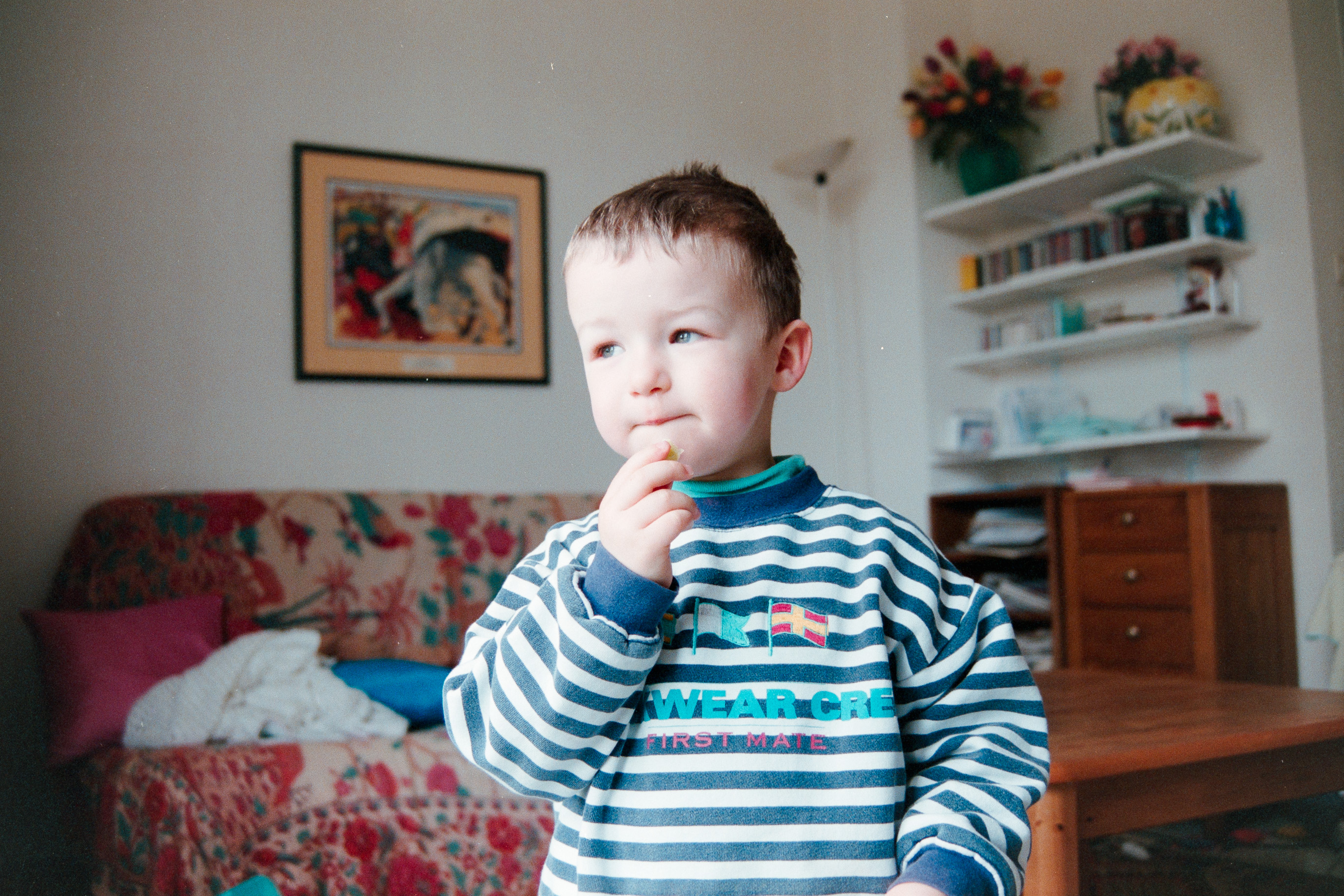
I encountered more difficulties than expected, so I thought it might be useful to share my experience if you had a similar project.
The workflow
The workflow is as follows:
- Clean and organize your negatives
- Set up your scanning gear (film holder, backlight, camera)
- Take a picture of your negatives
- Transfer the images to your computer
- Organize your digital collection and add metadata: original date, type of film, etc.
- Invert the colors to obtain positives
- Do the final adjustments (crop, remove dust, optional color corrections, etc.)
I am currently learning and improving my workflow. I may expand this article or create a series of dedicated posts later. If you would like me to elaborate on a specific point, feel free to contact me!
